WHAT WE BELIEVE
The ideas behind the work
Better Company grew out of a simple conviction: the way most organizations are managed is the thing that’s slowing them down. These are the principles that guide our work — and the book that started the conversation.
THE UNMANAGER'S MANIFESTO
Eleven principles for organizations that actually work
These aren't aspirations. They're operating commitments — tested across hundreds of engagements. They describe how teams behave when the structure lets them.
We Are Fans of Our Humanity
We are all more gifted, capable, and motivated than we can often see in ourselves — or each other.
We Work Better Together
The best outcomes happen through trust and transparency. We assume and expect positive intent in everyone.
Taking Turns Makes More Winners
Our drive and strengths can sometimes overshadow others. We take turns, pace ourselves, and make space for everyone to contribute and grow.
The Speed of the Team Is the Speed of the Organization
Our primary job as leaders is to ensure team focus, flow, and productivity. When teams thrive, so does the whole system.
Relinquishing Control Unleashes Human Potential
Control, when imposed on others, becomes toxic. True leadership comes through authority paired with mentorship — unlocking the best in individuals and teams.
The Collective Outperforms the Silo
Shared understanding beats isolated knowledge. We make the 'why' visible so we can collectively deliver the 'what' and 'how.'
Direct Communication Over Intermediaries
Rich, direct communication creates clarity. Alignment between teams and customers is our top priority.
We Are Present, On Time, and Connected
We show up. We speak in realities. We stay connected and aligned in purpose, understanding, and action. We share what we learn and help when help is needed.
Questions Are the Best Way to Learn and Lead
All meaningful learning starts with questions. We lead by asking — not telling — because discovery is more powerful than instruction.
We Work Better Together with Artifacts
Shared visual tools — colorful, interactive, and collaborative — enhance communication and understanding.
Conversation and Communication Often Outperform Systems
Tools are tempting, but we value clarity and connection over complexity. We keep systems simple so communication can stay rich and human.
-
Gold Medal — Thought LeaderAxiom Business Book Awards
-
Winner — Business GeneralNYC Big Book Award
-
Winner — Thought LeaderGoody Business Book Awards
-
Gold — Team BuildingHustle & Heart Book Awards
-
WinnerIndependent Press Award
The Book
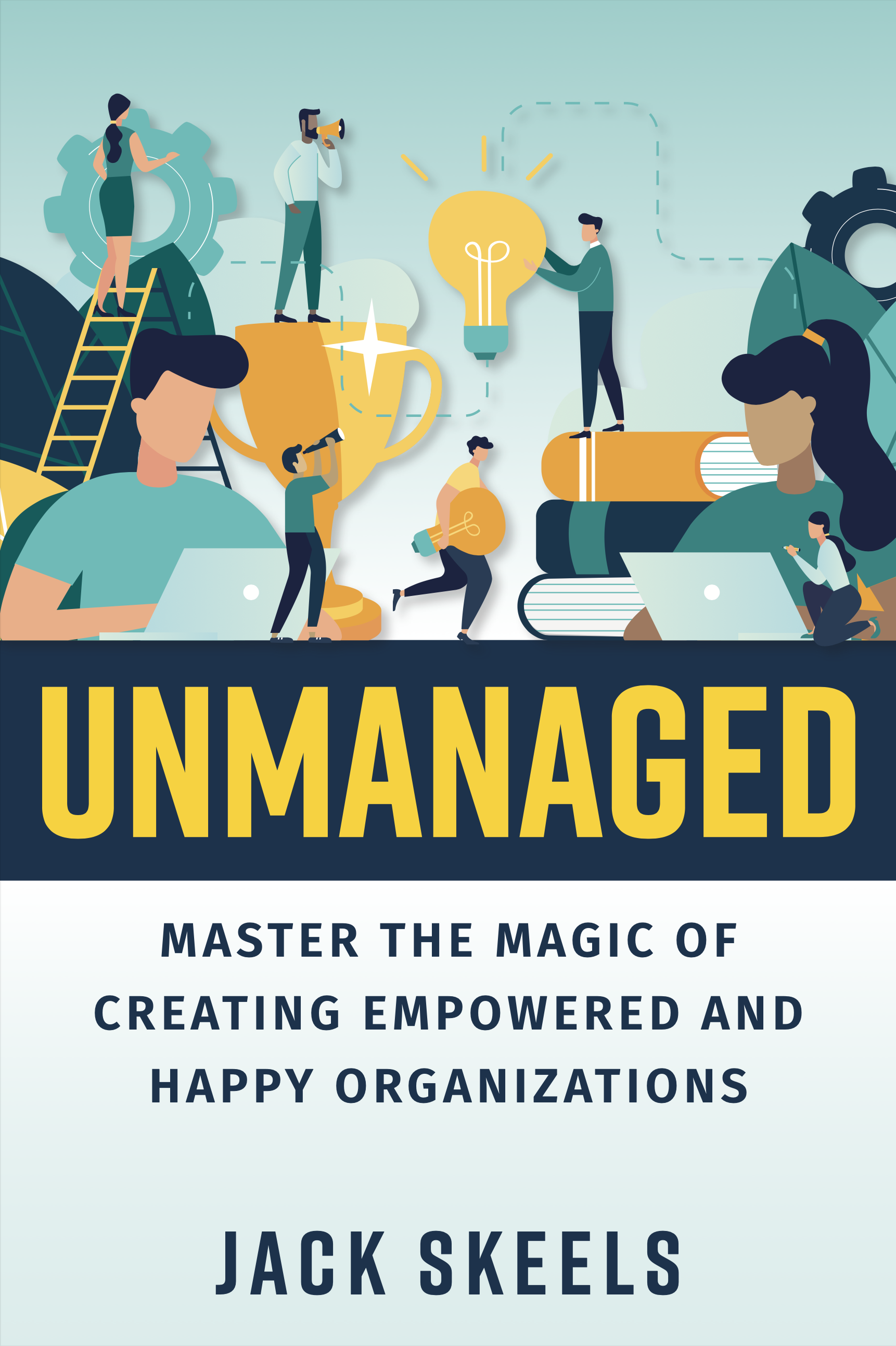
UNMANAGED
“A bracing, standard-resetting approach to doing management right.”
— Kirkus Reviews
You grew from 15 people to 45 and something broke. Projects take longer. Margins are thinner. Your best people are stretched across too many things, and the managers you promoted are spending more time in meetings than actually helping anyone do the work. UNMANAGED explains why — and what to do about it.
Built on patterns identified across 200+ agencies, consultancies, and project-driven organizations, the book lays out why the standard management model is the thing that's slowing you down — and provides a practical framework for replacing it with something that lets your teams actually move.
Key Concepts from the Book
The Manager Tax
Every manager you add costs more than their salary. They tax profits, productivity, and each other — through coordination overhead that grows geometrically. At 30–50 people, this hidden cost can consume 30% or more of your capacity.
The Firefighter Manager
Your best specialist got promoted. Now they micromanage, dominate meetings, and do other people's work. You lost your best producer and gained a bottleneck. The book explains why this happens and how to break the pattern.
Four Key Managerial Moments
Why, What, Go, Grow. Most managers over-control Go (execution) while starving the other three. When teams own the Why and What, the Go takes care of itself — and Grow finally gets room to happen.
The Ignorance Gap
Every project starts on a Plateau of Optimism, crashes into a Chasm of Despair, and climbs a Death March. The cause? Scope built by managers instead of teams. The fix changes how projects begin.
NOCO
Naturally-Occurring Chaotic Organization — the default state of every project-driven firm. Multiple managers, shared resources, competing priorities. If this sounds like Tuesday at your agency, it's not a people problem. It's a structural one.
The ACE Model
Authority, Control, Empowerment. Most organizations have too much Control concentrated in managers and too little Empowerment flowing to teams. Shifting this balance is the single highest-leverage change a leader can make.
These ideas become operational reality.
The manifesto isn’t wall art. It’s a diagnostic. If the gap between these principles and your current reality feels wide, that’s where we start.
No pitch, no pressure. Just a conversation about what you're seeing.